

Protecting Your Systems From Arc Flash Hazards
Resources
Why Arc Flash Safety Matters
Electricity fuels our world, and electrical hazards are present in every workplace. Identifying and understanding these hazards is the best way to prevent injuries, equipment downtime, or even worse- death. According to the US Bureau of Labor Statistics, an average of approximately 150 recorded workplace fatalities relating to electrical incidents occurred each year, spanning from 2011-2024.
While the electrical shock hazard is the most common among workplace electrical hazards, the most important for us to properly identify and prepare for is the arc flash hazard.
What is an Arc Flash?
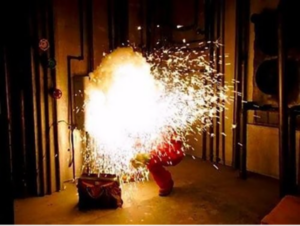
An arc flash is defined as a dangerous electrical explosion that occurs when electrical current jumps through the air either between conductors or to the ground, or other grounding body. An arc flash differs from other electrical faults in the fact that the energy has built up to such a point that electrical current is able to travel (arc) through the air rather than through a conductor.
An arc flash is a serious electrical event, and often in more serious cases can result in equipment being destroyed in addition to personal injury or lives lost.
What Causes an Arc Flash?
There are many factors that go into what may cause an arcing event, ranging from general wear and tear, environmental factors, and even human error. Some common causes include:
- Worn or compromised wire insulation
- Overly loose, tight, or rusted metal connections
- Dust, dirt, or water buildup inside equipment
- Metal components being dropped within panel enclosures
- Incidental contact with electrical equipment (accidentally pulling or clipping wires)
The Dangers of Arc Flash Incidents
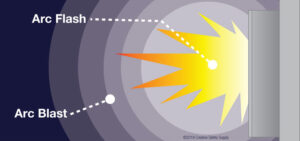
As mentioned previously, the arc flash is one of the most dangerous electrical events that can occur. An arc flash creates an intense flash of light and creates extreme heat, in some cases up to 35,000F. For reference, the metal with the highest melting point known to man is tungsten, which pales in comparison, with a melting point of approximately 6,200 OF. That is to say, an intense enough arcing event can literally melt a hole through the equipment it occurs within.
With such a big release of energy, there is also the resultant shockwave to be aware of, this is known as an arc blast.
An arc blast is caused by the rapid expansion of air due to extreme heat, resulting in a shockwave strong enough to throw shrapnel, and even people.
Aside from burns, impacts caused by arc blasts are the next main cause of injuries related to arc flash events.
Understanding Arc Flash Analysis
The standards for arc flash risk assessment are set by the National Fire Protection Association, via the NFPA 70E. These standards require employers to evaluate any electrical equipment which would reasonably be expected to be service while energized. With the purpose of identifying hazards and making qualified electrical personnel aware of them.
This is achieved by applying arc flash labels to equipment, which meet the requirements set forth in the NFPA 70E Section 130.5. These requirements are as follows:
- Nominal system voltage
- Arc flash boundary
- At least one of the following:
- Available incident energy and the corresponding working distance
- Minimum arc rating of clothing
- Site-specific level of PPE
The primary purpose of these labels is to inform electrical personnel what personal protective equipment (PPE) they should be wearing while servicing electrical equipment.
The NFPA also requires that new arc flash assessments be performed every 5 years, or when major changes are made to an electrical system. It is important to keep these assessments up to date, as there are many factors that can impact the fault current and incident energy values they are meant to evaluate, and it is crucial that the information printed on labels is accurate to best reduce the risk of injury.
How to Protect Your Systems From Arc Flash Hazards
Proper labeling and PPE are important for reducing the hazards posed by arc flash events, but should serve as the last line of defense. There are several engineering and administrative controls that can be utilized to protect both electrical systems as well as personnel from hazards that may occur.
Engineering controls serve the function of physically removing or isolating workers from a hazard. A few examples of this as it pertains to arc flash include installing arc-resistant equipment, installing current limiting devices such as fuses, breakers, or relays, and proper equipment design and maintenance.
Administrative controls serve the function of changing the way work is performed when in the presence of various hazards. Having proper training and safe work practices, stringent lockout/tagout procedures, as well as meeting code requirements for labeling and PPE are the best administrative ways to reduce hazardous conditions and their impact on your employees.
It can’t be emphasized enough, the importance of understanding the hazards of the workplace. This applies to both the employer and the employees. It is the employer's responsibility to be aware of said hazards, and to bring them to the employees’ attention, meanwhile implementing systems to protect the employees as well.
The risk of an arc flash event occurring will always be present while servicing electrical equipment while energized. However, there are many ways in which the hazard can be reduced. Frequent review of an electrical system is crucial for making sure that safety standards are maintained and can even reveal opportunities for reducing arc flash hazard beyond what it was before.
Prioritizing electrical safety will not only protect the well-being of your employees, it could save lives.